
When facial surgery and aesthetic procedures put health and identity at risk
Beauty should never put a life at risk
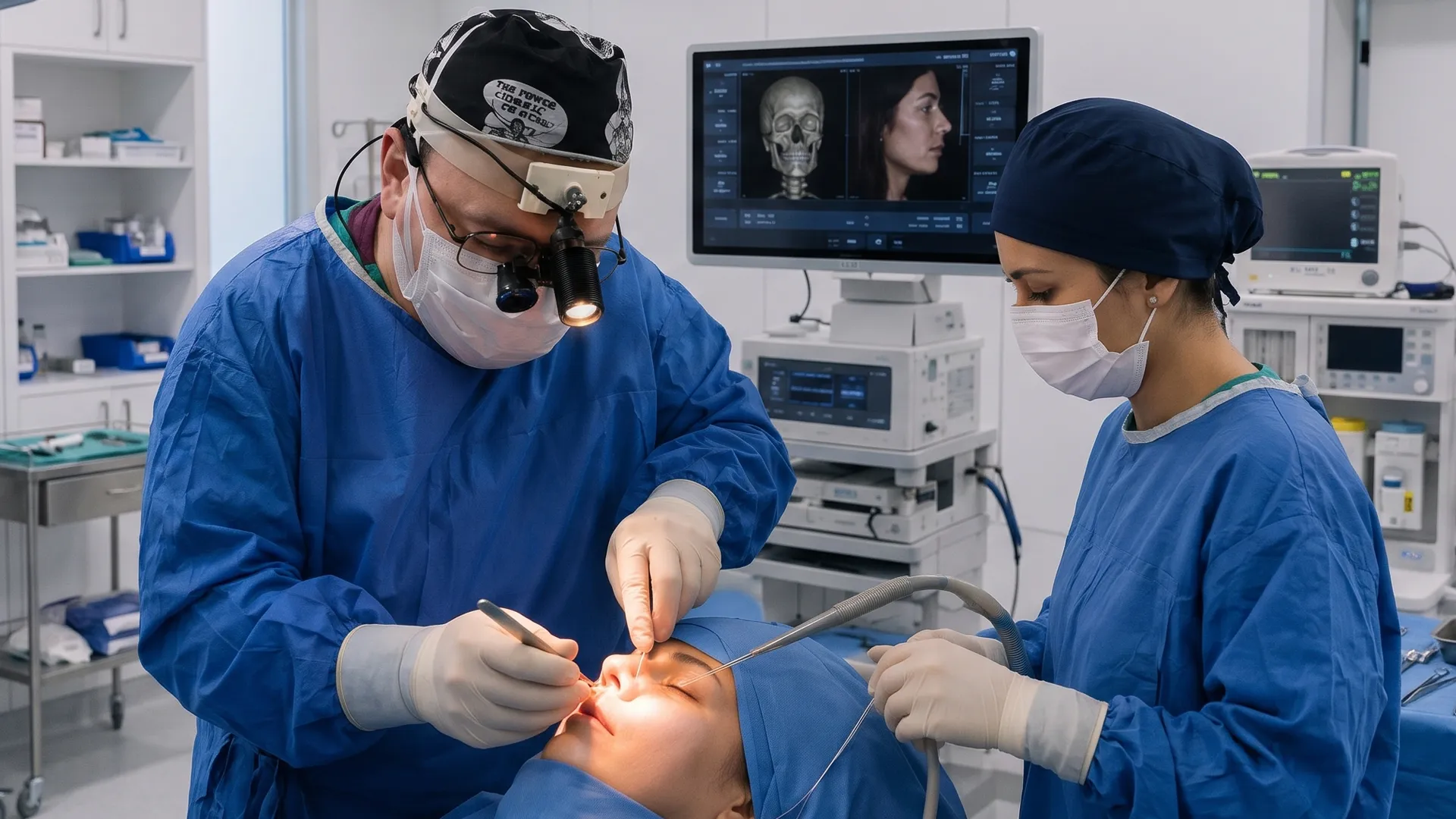
Aesthetic medicine and facial plastic surgery have made remarkable advances. Yet these developments coexist with a troubling reality: procedures performed by individuals who lack adequate education, training, experience, or legal authorization. What should be a positive experience can result in lasting physical, psychological, and financial harm. The face is an anatomically complex region containing blood vessels, nerves, muscles, and structures essential to vision, breathing, and expression. Treating it demands precise knowledge and professional responsibility.
Beyond surgery: the risks of aesthetic procedures
The problem extends beyond rhinoplasty, blepharoplasty, otoplasty, and facial rejuvenation surgery. It also includes botulinum toxin injections, hyaluronic acid fillers, biostimulators, thread lifts, lipolysis, lasers, and energy-based devices. Many are legitimate treatments when appropriately indicated and
performed by qualified, legally authorized professionals. Their seemingly simple nature does not eliminate risk: clinical assessment, technique, product quality, and complication management all matter.
Botox and dermal fillers are not merely beauty treatments
Botulinum toxin treatment requires an understanding of facial muscles and the functional consequences of changing their activity. Improper administration may cause asymmetry, eyelid drooping, and altered smiles; rarely, serious systemic effects. Dermal fillers can cause infection, nodules, and inflammation. Intravascular injection can lead to arterial occlusion, skin necrosis, and, exceptionally, vision loss or stroke. These complications can occur even with experienced practitioners: training reduces risk but does not eliminate it. Early recognition and urgent treatment are critical.
Biopolymers, unknown substances, and counterfeit products
Liquid silicone not authorized for aesthetic augmentation, substances marketed as biopolymers, mixtures of uncertain composition, and certain permanent materials may cause granulomas, fibrosis, migration, infection, and delayed deformities. Removal may be difficult or incomplete. Counterfeit botulinum toxin and fillers, or products obtained through unauthorized channels, are also serious concerns. Before consenting, patients should know the product name, manufacturer, source, and intended use.
When a procedure changes function and identity
Poorly planned or executed nasal surgery may impair breathing; eyelid surgery may compromise eye closure; facial interventions may injure nerves and alter expression. Aesthetic complications may require prolonged reconstructive treatment, and full tissue recovery is not always possible. Facial
plastic surgery must respect facial harmony, function, and each patient’s individual features.
Social media, promotions, and misleading guarantees
Instant-transformation videos, before-and-after photographs, and aggressive discounts do not establish clinical competence. Procedure bundles and promises of guaranteed results may obscure real risks. A responsible practitioner evaluates medical history, anatomy, expectations, contraindications, and alternatives—and knows when to decline treatment. Social-media popularity never substitutes for credentials or experience.
Licensure, competence, and professional scope
Regulations differ between Colombia and the United States, and among U.S. states. Certain procedures may legally be performed by different licensed healthcare professionals, depending on training, scope-of-practice rules, and applicable supervision requirements. Safety therefore depends on more than a professional title: it requires valid authorization, relevant education, procedure-specific training, experience, suitable facilities, and the ability to manage complications. A short course does not by itself equal medical or surgical specialty training, and a license does not automatically authorize every procedure.
Otolaryngology and facial plastic surgery: science and function
Training in Otolaryngology–Head and Neck Surgery provides detailed knowledge of facial anatomy and physiology. Additional training in Facial Plastic, Aesthetic, and Reconstructive Surgery integrates appearance, function, and reconstruction. In rhinoplasty, eyelid surgery, otoplasty, and facial rejuvenation, the goal should be a balanced, natural result consistent with the patient’s health. Beauty should rest on science, artistry, and medical responsibility.
Ten ways to protect yourself
- Verify the professional’s current license and legal scope of practice.
- Ask about training and experience specific to the procedure.
- Identify the product, manufacturer, source, and regulatory status.
- Check the facility’s hygiene and safety standards.
- Insist on an individualized clinical assessment.
- Request a discussion of risks, benefits, and alternatives.
- Be wary of unusually low prices or guaranteed outcomes.
- Ask how complications are treated and referred.
- Do not rely solely on social-media content.
- Never accept invasive procedures from legally unauthorized individuals.
Warning signs after an aesthetic procedure
Severe or worsening pain, pale or purple skin, visual changes, unexpected weakness, fever, or rapid deterioration require urgent medical evaluation. After a filler injection, sudden visual changes or signs of vascular occlusion are emergencies: do not wait or attempt home remedies. Prompt treatment may
reduce harm but cannot guarantee complete recovery.
A perspective from the United States and Colombia
As a physician specializing in Otolaryngology and Facial Plastic, Aesthetic, and Reconstructive Surgery, with a professional career in the United States and Colombia, I believe patient education and credential verification are essential. A laser cannot replace clinical judgment; a syringe does not make someone
an expert in facial anatomy; and a course-attendance certificate cannot replace professional training. Aesthetic medicine must advance through transparency, ethics, and respect for human well-being.
The face is our identity
The face conveys emotion and connects us with others. A deformity can affect self-esteem, relationships, and well-being. Before treatment, research, ask questions, and choose properly authorized and trained professionals. True success is not merely an improved appearance: it is the preservation of health, function, and individuality. Beauty should be the result of science, artistry, and medical responsibility—never improvisation.